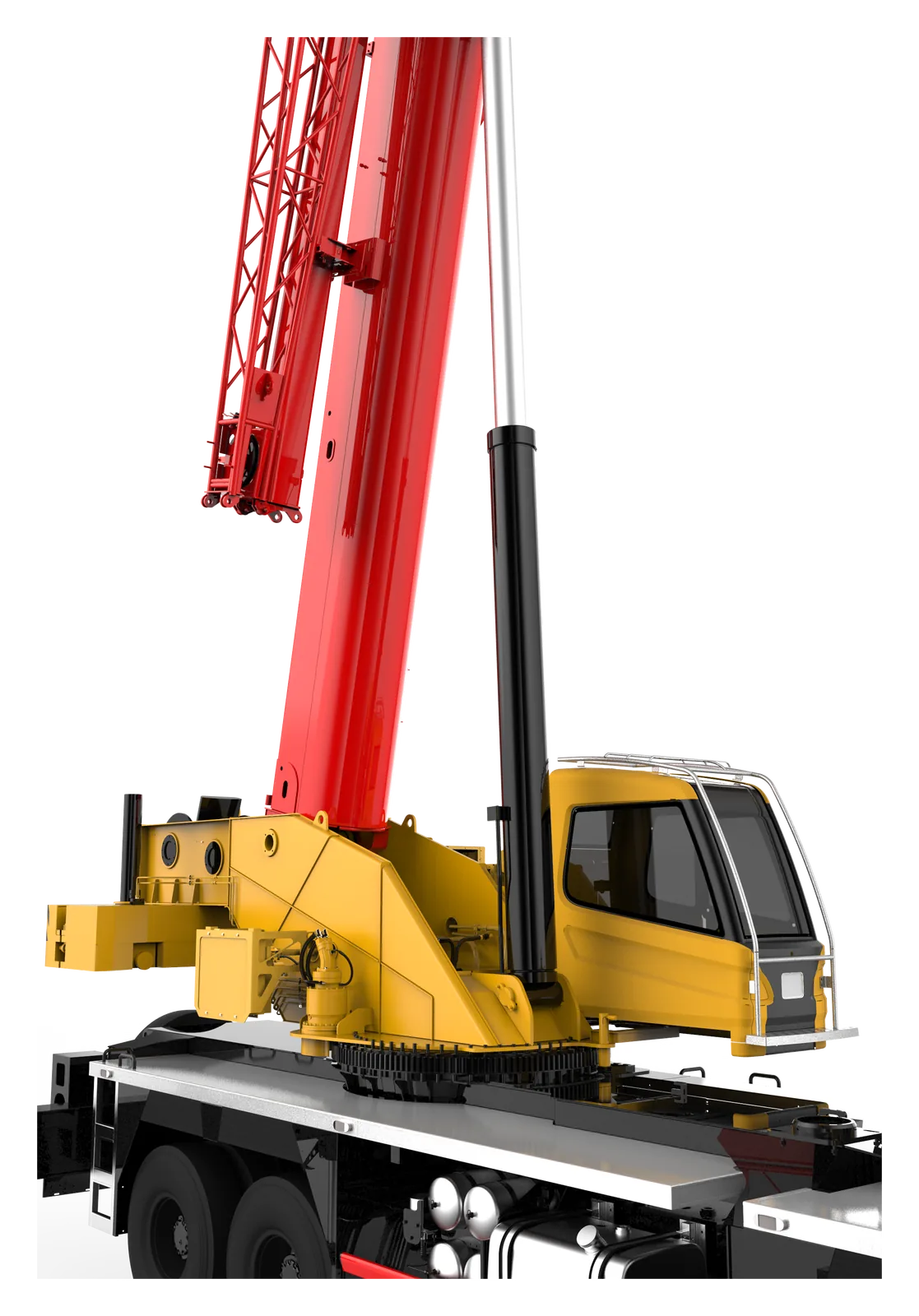
Wind is the limit that most often stops a lift — and the load chart assumes you know the wind speed rather than estimating it.
Every crane load chart is written around an assumed maximum wind speed. Exceed it and the chart no longer applies — not as a margin being eaten into, but as a calculation that no longer holds. Which raises an obvious question: how does the operator know what the wind is actually doing at the boom head?
Ground-level estimation is not an answer. Wind speed at the top of an extended boom is routinely much higher than at ground level, and the difference grows with height and with the surrounding terrain. An operator judging conditions from the cab door is working from the wrong number.
Traditional cable-type anemometers solved the measurement problem but introduced a maintenance one: a signal cable running the length of the boom, which chafes, snags during reeving and eventually fails at a connector. In practice, many are disconnected and never repaired.
A wireless system removes that failure mode. The sensor sits at the boom head, battery powered and IP-67 rated, and transmits to a handheld receiver at ranges up to 500 metres. The receiver shows current and peak wind speed and sounds a 90 dB alarm at a threshold you set, which means the lift supervisor on the ground and the operator in the cab are working from the same reading at the same moment.
One practical point on mounting: position matters. A sensor sitting in the lee of the boom, a building or a stack of materials will under-read, and an under-reading anemometer is worse than none at all because it carries authority. Mount it clear, in undisturbed air.
We supply Scarlet Tech wireless anemometer systems complete with sensor, receiver and mounting hardware, and they transfer between machines — which suits rental fleets and multi-crane sites well.
More articles
-
Where to buy crane parts in the UAE: a buyer's guide
16 Aug 2026
-
Filter maintenance in the Gulf climate: why the book interval is optimistic
07 Aug 2026
-
How to identify a spare part from a photograph
31 Jul 2026