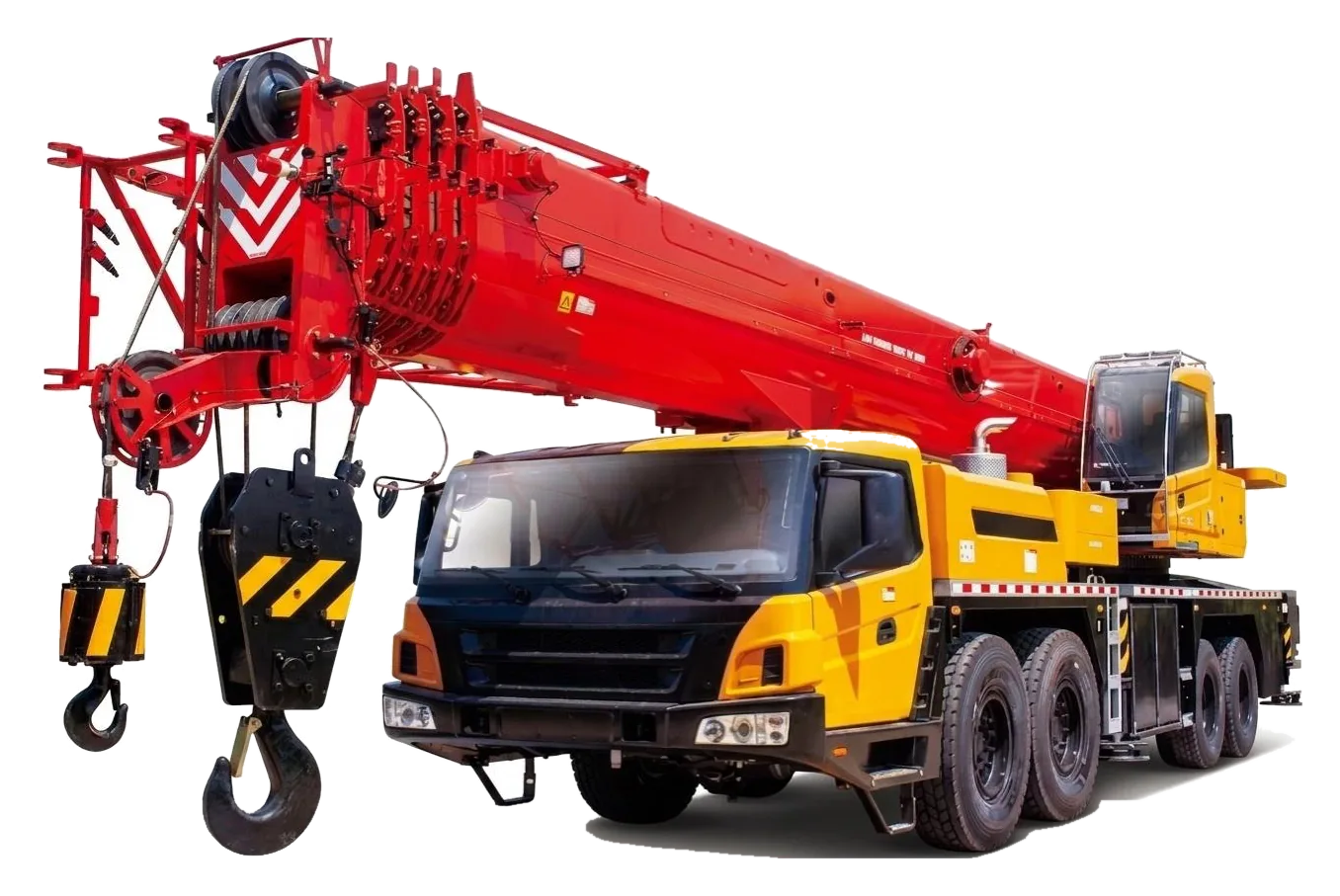
What to check before you commit to a supplier, how lead times really work in the UAE, and what information turns a slow quote into a same-day one.
The UAE has no shortage of places selling crane parts. What varies enormously is whether the part arrives, whether it fits, and whether anyone tells you the truth about when it will get to you. This is a practical guide to buying crane parts in the UAE — written by a supplier, so read it with that in mind, but the checks below hold whoever you buy from.
Start with what actually stops machines
Before comparing suppliers, be clear about what you are buying for. Across the machines we support, the components that most often take a crane out of service are hydraulic (pump wear, valve spools, cylinder seals), filtration-related failures that were preventable, electrical faults in sensors and connectors, and wear parts that were left past their interval — boom wear pads above all.
A supplier who stocks broadly across those categories will resolve more of your downtime than one who stocks deeply in a narrow range. Ask what they hold in stock in the UAE, not what they can order.
Check they can identify a part from a photograph
Most real enquiries do not come with a part number. They come as a phone photo of a greasy component taken next to a machine that is not working. Any supplier worth using should be able to work from the equipment make, model and serial number plus clear photographs — particularly of the component's nameplate.
If a supplier can only quote against a part number you provide, you are doing the identification work and carrying the risk of getting it wrong.
Understand how lead times really work here
There are three realistic categories, and a good supplier will tell you which one you are in before you commit:
Stocked in the UAE — collection or dispatch within 24 hours, reaching most emirates the next working day. This is what you are paying a local supplier for.
Sourced from the regional supply network — typically a few days to two weeks, depending on the manufacturer and the shipping method.
Ordered from the factory — weeks, sometimes months, particularly for structural components and anything requiring manufacture to order.
The warning sign is a supplier who quotes the same optimistic figure for everything. An honest three-week lead time you can plan around costs you far less than an optimistic one-week date that slips twice.
Ask how they handle genuine versus aftermarket
Both have a legitimate place, and a supplier who will only sell you one is either limited or not being straight with you.
Genuine OEM is the right answer for structural components, anything in the load path, brake friction material and safe load indicator parts. Quality aftermarket is usually the sensible choice for filtration, seals, gaskets, hoses, belts and general consumables — often at a fraction of the cost and available faster.
The question to ask is not "do you sell genuine parts?" but "which would you fit on this application, and why?"
Factor in the Gulf climate
Service intervals printed in equipment manuals assume temperate conditions. Ambient temperatures above 45 °C, coastal humidity and constant fine airborne dust shorten the life of filters, seals, hoses and cooling components considerably.
A supplier who knows the region will raise this unprompted — recommending Viton seals over nitrile for high-temperature circuits, shorter air and hydraulic filter intervals through summer, and attention to water separators in humid coastal conditions. One who quotes the book interval without comment has not thought about where your machines actually work.
What to send to get a fast, accurate quote
Whoever you buy from, send this in one message and you will usually get an answer the same day:
1. Equipment make, model and serial number 2. The part number from the component, if it carries one 3. Clear photographs — the whole component from two angles, plus a square-on shot of the nameplate 4. Key dimensions: bore, rod diameter, closed length and stroke for cylinders; shaft and flange details for pumps; voltage and connector type for electrical parts 5. How urgent it is, and what the downtime is costing — this determines whether air freight makes sense
Buying locally versus importing directly
For a single component, importing directly rarely works out well. Minimum order values, long lead times and customs handling you manage yourself all apply while the machine stands idle. Buying locally means stocked items move the same day, sourced items ride on a consolidated shipment, and if something turns out to be wrong there is someone in your time zone to resolve it.
Direct import makes sense for planned, bulk consumable purchases — not for a machine that stopped this morning.
Where we fit
Mega Crane Trading L.L.C. supplies crane parts across eleven product categories covering the whole machine, delivering to all seven emirates and the wider GCC from its premises at Plot 11-0, Oud Metha, Dubai. We work with both genuine OEM suppliers and quality aftermarket manufacturers, and we identify parts from photographs every day.
Send us the make, model and a photograph on +971 56 153 3944 or sales@megacranetrading.com and we will come back with options, honest lead times, and a recommendation on which route suits the job.
More articles
-
Wireless anemometers: knowing when to stop the lift
14 Aug 2026
-
Filter maintenance in the Gulf climate: why the book interval is optimistic
07 Aug 2026
-
How to identify a spare part from a photograph
31 Jul 2026