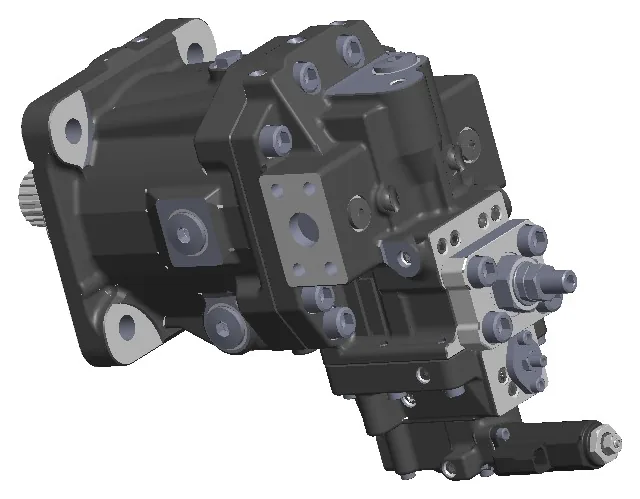
Most enquiries reach us without a part number. Here's what to photograph and measure so we can identify a component correctly the first time.
Very few enquiries arrive with a clean part number. Far more often it's a photograph taken on a phone in a workshop, with a machine standing idle in the background. That's fine — we identify parts from photographs every day — but the quality of what you send determines how fast we can come back with an answer.
Start with the nameplate. Almost every hydraulic, electrical and drive line component carries a plate, sticker or stamped marking with the manufacturer's own designation. Clean it, get the light right and photograph it square-on and in focus. That single image resolves more enquiries than everything else combined.
Next, photograph the whole component from two angles, including the mounting face and the port or connector side. Mounting patterns and port arrangements distinguish variants that otherwise look identical.
Then add measurements. For hydraulic cylinders: bore, rod diameter, closed length, stroke, and the pin or eye dimensions at each end. For pumps and motors: shaft diameter and spline count, flange type, port sizes. For electrical components: voltage, connector type and the number of pins.
Finally, tell us the machine make, model and — importantly — the serial number. Build variants change mid-production far more often than the model designation suggests, and the serial number is what resolves them.
Send all of that in one message and you will usually have an identification and a price back the same day. Send a single blurred photograph of a greasy component and we will have to ask for the rest, which costs you a day.
More articles
-
Where to buy crane parts in the UAE: a buyer's guide
16 Aug 2026
-
Wireless anemometers: knowing when to stop the lift
14 Aug 2026
-
Filter maintenance in the Gulf climate: why the book interval is optimistic
07 Aug 2026